• Publication
Complementary and integrative health interventions for PTSD in Veterans and family members: A rapid systematic review and meta-analysis
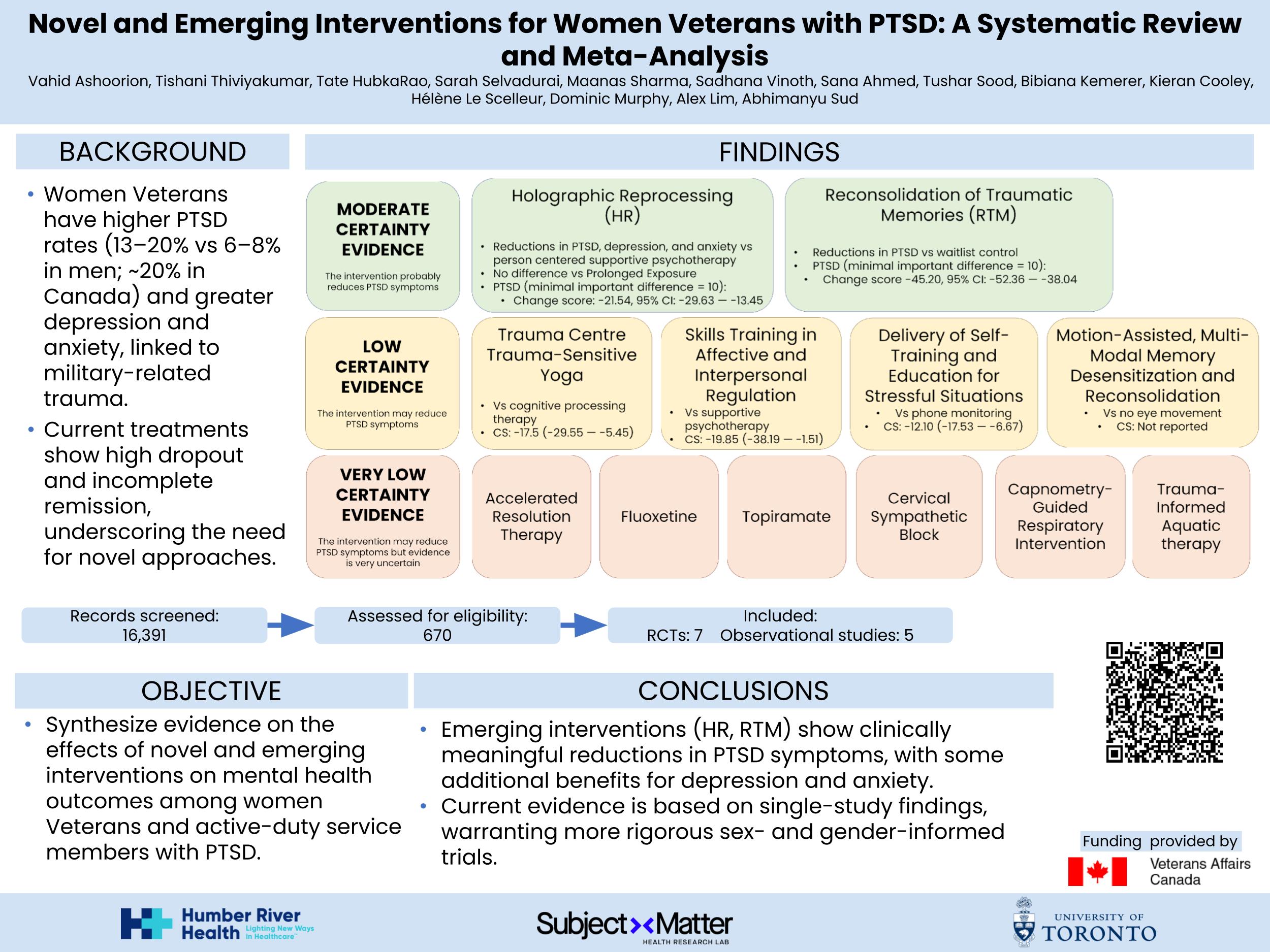
Novel and Emerging Interventions for Women Veterans with PTSD: A Systematic Review and Meta-Analysis
Citation
Ashoorion V, Thiviyakumar T, HubkaRao T, et al. Novel and Emerging Interventions for Women Veterans with PTSD: A Systematic Review and Meta-Analysis. UofT DFCM Conference 2026. 2026 May 13. Toronto ON.
Abstract
Background: Women Veterans experience a high burden of posttraumatic stress disorder (PTSD) and related mental health challenges, yet they remain underrepresented in intervention research, and sex- and gender-disaggregated reporting is limited. Consequently, evidence to guide gender-responsive care for women Veterans is sparse. This gap is particularly relevant to primary care, where women Veterans often first present with mental health concerns and where primary care providers play a central role in recognition, referral, and longitudinal coordination of care.
Objectives: To synthesize and evaluate evidence on novel, emerging, and alternative mental health interventions for PTSD and related outcomes among women Veterans and active-duty service members.
Methods: Eligible studies included randomized controlled trials (RCTs) and observational studies with women-only samples or sex-disaggregated outcomes evaluating interventions without sufficient evidence for or against use in the 2023 VA/DoD PTSD guideline. We searched the National Center for PTSD trials repository and major bibliographic databases through mid-2025. Risk of bias was assessed using RoB 2 and ROBINS-I, and certainty of evidence using GRADE. Random-effects meta-analysis was conducted when outcomes were reported by at least two comparable studies.
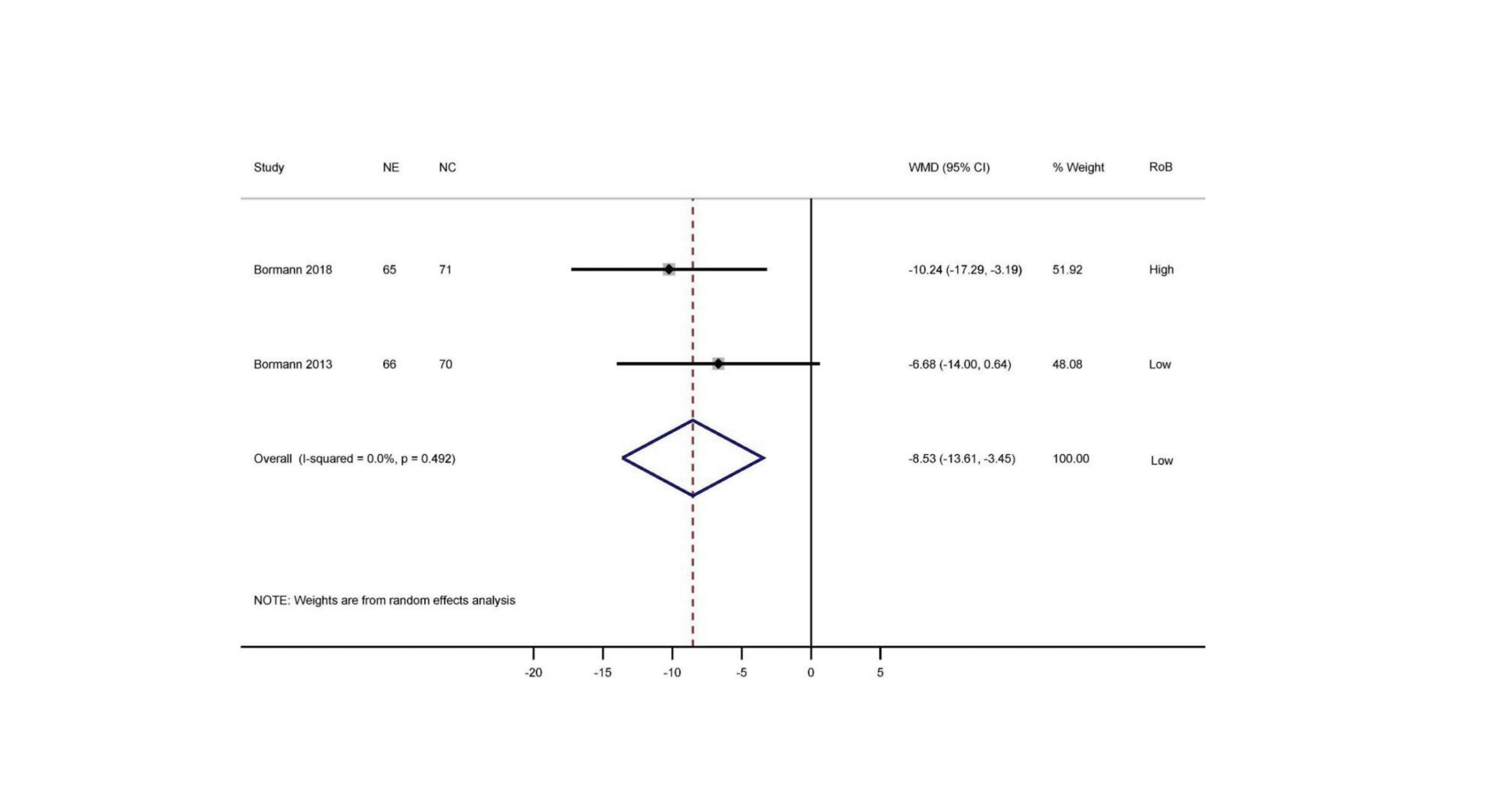
Results: Seven RCTs and six observational studies met inclusion criteria; most were conducted in the United States. Single trials provided moderate-certainty evidence that Reconsolidation of Traumatic Memories and Holographic Reprocessing reduced PTSD symptom severity, with Holographic Reprocessing also reducing depression and anxiety. Evidence for other interventions was low to very low certainty, commonly limited by small samples and high risk of bias. Meta-analysis comparing Trauma Center Trauma-Sensitive Yoga with cognitive processing therapy showed no significant between-group differences in PTSD severity, although Trauma-Sensitive Yoga was associated with symptom improvement from baseline.
Conclusions / Implications: Several novel and alternative interventions show promise for women Veterans with PTSD, but the current evidence base is limited. Larger, well-designed studies that account for sex and gender and include diverse national contexts are needed to better inform clinical practice and program development.
Project Team
Tate HubkaRao